Chief Hosea Komombumbi Kutako
1870–1970 | Traditional leader, anti-colonial statesman and pioneer of Namibia’s international struggle.
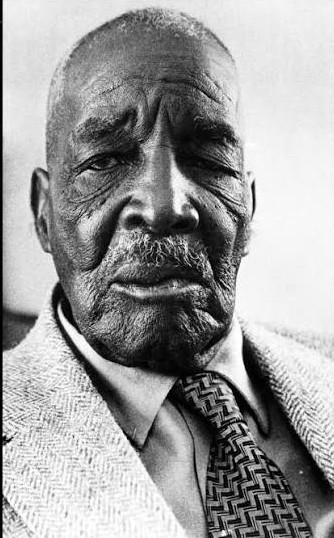
Chief Hosea Kutako
National Hero of Namibia
1870 – 1970Biography
Chief Hosea Komombumbi Kutako was one of Namibia’s earliest nationalist leaders. Born in 1870, he lived through German colonial rule, the Herero and Nama uprising (1904–1908) and decades of South African administration of South West Africa. United Nations records describe him as an early nationalist, a founding member of the South West African National Union (SWANU) (a role institutionally recognized by the UN, though historians sometimes frame his involvement as symbolic rather than organizational), and a leader in the aftermath of the Herero and Nama uprising (1904–1908) (with UN institutional records listing him as a commander).[1]
Kutako’s most consequential contribution was to internationalise Namibia’s political struggle. In 1946, acting through the Anglican priest and campaigner Rev. Michael Scott, he petitioned the newly created United Nations against South African rule. The United Nations in Namibia identifies this initiative as the beginning of Namibia’s long relationship with the UN.[2] At the same moment, South Africa was seeking international acceptance for closer incorporation of South West Africa. On 14 December 1946, the UN General Assembly adopted Resolution 65(I), declining to approve incorporation and recommending that South West Africa be placed under the international trusteeship system.[3]
Kutako continued petitioning through the 1950s and into 1960. The General Assembly formally considered petitions from Kutako, David Roos and Erastus Amgabeb in Resolution 936(X), adopted on 3 December 1955.[4] International Court of Justice records preserve Kutako communications dated 2 September 1954, 30 October 1956, 27 November 1957 and 14 September 1960.[5] Further General Assembly resolutions in 1957, 1958 and 1959 recorded and considered petitions and communications that included Kutako’s representations.[6][7][8]
The petitions raised issues at the core of colonial rule: African political exclusion, racial discrimination, removals and reserve conditions, poverty and restrictions affecting political organisation. Their importance was also institutional: they created a continuing written record before international bodies. Extracts from Kutako’s communications were later placed before the International Court of Justice in the South West Africa proceedings.[5][9]
Kutako also bridged traditional authority and the emerging nationalist movement. The UN records him as a founding member of SWANU, established in 1959—a founding role that is institutionally recognized by international bodies, though historians note that his leadership was frequently symbolic rather than focused on day-to-day organizational politics.[1] His political method combined leadership at home with sustained international advocacy, recognising the importance of international law, diplomacy and the United Nations.
Kutako died in 1970, twenty years before Namibia became independent on 21 March 1990. The strategy he helped establish endured: Namibia remained before the United Nations for decades, while the legal status of South African rule became a major international issue. The UN commemorates Kutako as one of Namibia’s national heroes, and a bronze bust presented to the UN in New York in 1962 remains a symbol of the international dimension of his struggle.[1] His enduring legacy is that he helped make Namibia’s demand for self-determination an international cause.
Sources and References
Primary and institutional sources used for the biography above. Where historical assertions in secondary accounts were not supported by these records, they were omitted.
- United Nations Gifts — “Bust of Chief Hosea Kutakoâ€. UN institutional biography: 1870–1970; early nationalist leader; founding member of SWANU; participation in the Herero and Nama uprising (1904–1908); petitioning for UN trusteeship; bust presented to the UN on 22 November 1962.
- United Nations in Namibia — “The UN’s role in Namibian Independenceâ€. States that Namibia’s long history with the UN began when Hosea Kutako, through Rev. Michael Scott, first petitioned against South African rule in 1946.
- UN General Assembly Resolution 65(I) — “Future Status of South West Africaâ€. Adopted 14 December 1946; official UN Digital Library record.
- UN General Assembly Resolution 936(X). “Petitions and related communications from Mr. Hosea Kutako, Mr. David Roos and Mr. Erastus Amgabeb concerning South West Africaâ€; adopted 3 December 1955.
- International Court of Justice — South West Africa, pleadings, Books VII–X. Includes extracts from Kutako communications dated 2 September 1954, 30 October 1956, 27 November 1957 and 14 September 1960.
- UN General Assembly Resolution 1139(XII). Petitions and communications including Chief Hosea Kutako concerning South West Africa; adopted 25 October 1957.
- UN General Assembly Resolution 1244(XIII). “Petitions and communications in regard to the Territory of South West Africaâ€; adopted 30 October 1958.
- UN General Assembly Resolution 1356(XIV). “Petitions and communications relating to South West Africaâ€; adopted 17 November 1959.
- International Court of Justice — Memorial submitted by the Government of Ethiopia. South West Africa proceedings; reproduces and relies on extracts from petitions received by UN bodies, including Kutako’s 30 October 1956 communication.
Note on Verification
This document deliberately relies principally on United Nations and International Court of Justice records. It avoids uncertain details that could not be confirmed in those sources, and does not treat allegations contained in historical petitions as independently proved facts unless separately established.
A Legacy of Progress & Community
Discover master-planned land ownership on Windhoek's eastern airport corridor.